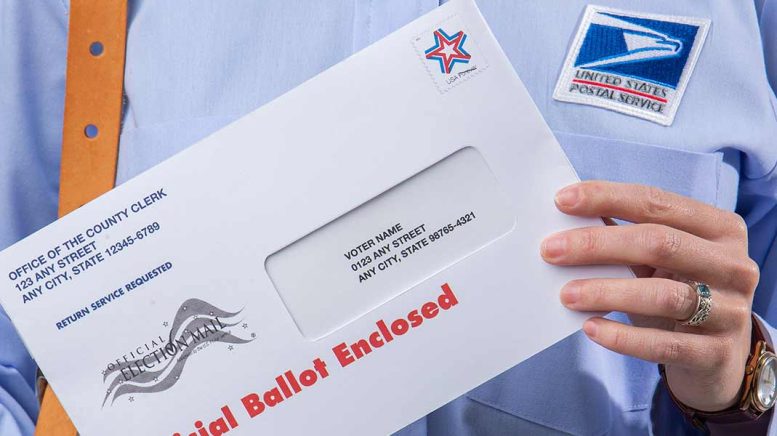
In the summer of 2020, in the midst of the pandemic, the new Postmaster General, Louis DeJoy, introduced operational changes that slowed down the mail. The changes were widely perceived as an attempt to undermine voting by mail in the November election. A dozen lawsuits ensued, and the Postal Service’s handling of ballot mail was intensely scrutinized by the courts.
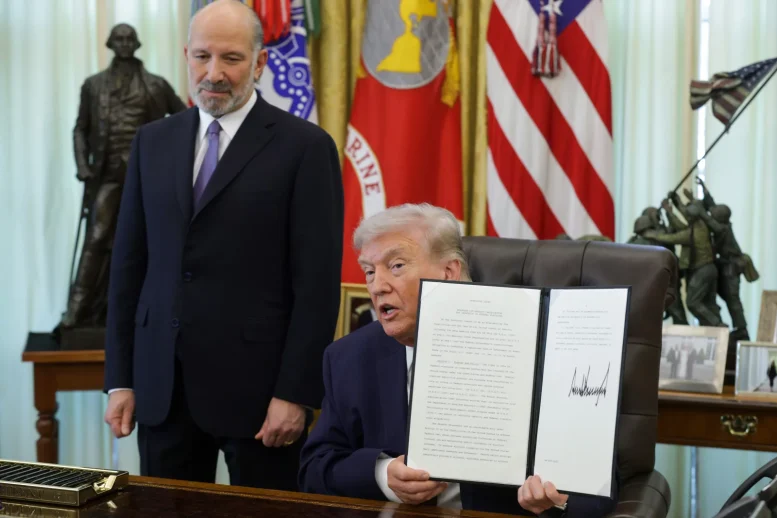
Now, as the 2026 election approaches, the Postal Service again finds itself embroiled in controversy. President Trump’s Executive Order on Federal Elections directed the Department of Homeland Security to compile eligible voter lists and instructed the Postal Service to deliver ballots only to voters on these lists. The order also directed the Postal Service to make changes in its regulations governing election mail. The order and the proposed rule have met widespread opposition.
As in 2020, the Postal Service is led by a new Postmaster General, the proposed changes did not go through a required review by the Postal Regulatory Commission, and the federal courts have stepped in to halt implementation. As before, the controversy has tarnished the reputation of one of the government’s most trusted agencies.
Here’s a rundown of the latest developments and key documents in the court cases, the USPS rulemaking, and the PRC proceedings.
Court Cases
NAACP v USPS. When the Postal Service made the changes that slowed the mail in 2020, one of the lawsuits was filed by the NAACP. On October 10, 2020, District Court Judge Emmet Sullivan issued a preliminary injunction putting a halt to the changes because, among other reasons, the Postal Service had made the changes without going through a PRC advisory opinion. In December 2021, the parties entered into a Settlement Agreement in which the Postal Service committed to make “good faith efforts to prioritize monitoring and timely delivery of Election Mail” through 2028.
The case seemed like ancient history, but then came Trump’s executive order and the Postal Service’s proposed rule, published in the Federal Register on June 2, 2026. The next day, the NAACP asked the court to enforce compliance with the 2021 agreement. On July 1, Sullivan issued a ruling that blocked implementation of the proposed rule because it violated the agreement. On July 6, the Postal Service filed a notice of appeal to the D.C. Circuit and a motion to stay Sullivan’s ruling.
State of California v. Trump: On June 25, District Judge Indira Talwani issued a ruling blocking the implementation of the executive order. The opinion says the order exceeded the president’s power and unconstitutionally violated the separation of powers by encroaching on the states’ and Congress’ authority to administer elections. Unlike Sullivan’s ruling in NAACP, which applies nationwide, Talwani’s ruling applies only to the states that brough the lawsuit. On July 2, eleven Republican state attorneys general filed a notice of appeal, a motion for a stay, and a memorandum in support of the stay. On July 7, the plaintiff states filed an oppostion to the motion for a stay. Later on July 7, the court denied the request for a stay but granted a 7-day administrative stay to give the government time to renew their stay request before the First Circuit.
League of Women Voters of Massachusetts v. Trump: This companion case to California v. Trump was brought by voting-rights organizations rather than states. On June 18, Judge Talwani ruled that the plaintiffs’ claims regarding the 2026 elections were ripe and allowed the case to proceed. She has not yet ruled on the plaintiffs’ motion for a preliminary injunction, although her June 25 decision in California suggests how she views the merits of the organizations’ claims.
Democratic Senatorial Campaign Committee v. Trump. On May 28, District Judge Carl J. Nichols denied the preliminary injunction requested by the DSCC, ruling that the plaintiffs lacked standing because the executive order had not yet been implemented and the case was not yet ripe. On June 1, the DSCC filed an appeal to the D.C. Circuit.
Watson v. RNC: On June 28, the Supreme Court ruled that states could continue to provide a grace period during which mail ballots can be accepted if they’re postmarked on or before Election Day. The decision protected the grace period in fourteen states. While not directly related to the executive order and USPS rulemaking, Watson thus has major implications for mail voting. Plus, the majority opinion by Justice Barrett begins by citing the Constitution’s Elections Clause, which empowers state legislatures to prescribe the “Times, Places and Manner of holding” congressional elections. That will probably be cited in arguments about the constitutionality of the executive order and USPS proposal.
The victory in Watson comes with an important caveat. Due to a change in the USPS transportation network, postmarks aren’t always applied on the day a letter is mailed. Ballots mailed on Election Day, or even the day before, may not get postmarked in time to be accepted as valid. In November, there’s likely to be a surge in rejected ballots because of this postmark problem. More on this below.
Buchanan v. United States Postal Service (1975): While we’re on the subject of court cases, it’s worth mentioning Buchanan, the foundational case interpreting 39 U.S.C. § 3661. Nearly every major dispute over whether the Postal Service must seek a Postal Regulatory Commission advisory opinion goes back to this case. Buchanan provided the test criteria for when Section 3661 applies: (1) there must be a “change” that has a meaningful, quantitative, impact on service; (2) the change must be “in the nature of postal services”—i.e., the proposed change must qualitatively alter the manner in which postal services are available to users; and (3) the change must affect service on “a broad geographical area.” As the 2026 court cases move forward, expect Buchanan to be cited frequently.
The Proposed Rule and Comments
Ballot Mail for Federal Elections: On June 2, 2026, the Postal Service published a proposed rule, “Ballot Mail for Federal Elections,” in the Federal Register. The proposal would apply uniform standards for mailing absentee ballots to and from voters in national elections. It would also require states to submit a list of registered mail-in voters, addresses, and barcode data before a federal election. Under the proposal, the USPS could refuse to deliver mail-in ballots to states that do not submit these voter lists. The proposal also requires uniformity in envelope design, including an Election Mail logo and barcode.
As mandated by the Executive Order, the Postal Service provided 30 days for public comments, with a deadline of July 2. While most agencies publish the comments they receive for a proposed rule, the Postal Service enjoys special status as an independent entity, and it does not publish these comments. It will instead summarize and respond to them in the final rule, which is expected — as stated in the executive order — on July 28. Anyone wishing to inspect the comments must review them in person, by appointment, at USPS Headquarters in Washington, D.C.
The Postal Service probably received hundreds of letters, pehaps thousands, as encouraged by groups like Nonprofit Vote, Congressweb, InvisibleTriCities, the League of Women Voters, and Democracy Docket, but we won’t ever see them. However, some comments filed by elected officials, election officials, postal unions, and nonprofits have been posted online.
Many of these comments make the same key points: The USPS lacks authority to condition ballot delivery on state compliance with federal voter-list requirements. The rule improperly intrudes on state control of elections, and it violates federal voting laws and the constitutional separation of powers. And the rule constitutes a nationwide change in the nature of postal services and should therefore have been reviewed by the Postal Regulatory Commission.
Here’s a rundown of the comments available online. (This list will be updated as more comments become available online.)
Attorneys General of several Republican states: The comment by the Republican state AGs appears to be the only one supporting the proposed rule that’s been shared online. Most of them filed an appeal in California. The comment begins by observing, “First, voter fraud is real, and second, the proposed regulations will help States combat voter fraud and shore up public confidence in elections in ways States could not do acting alone.” It concludes with, “In short, we support the Service’s proposed rule in full. It addresses real vulnerabilities inherent in mail-in voting, responds to legitimate and widespread public concerns about federal election integrity, and equips States with tools that strengthen their own oversight capabilities without displacing their authority.”
America First Legal: Here’s a second comment supporting the rule that was published after this article was posted. The AFL “commends” the proposed rule, but notes that it “leaves significant concerns about election integrity unresolved.” It “does not require any verification that voters are citizens or that they actually live in the state where they are registered; fails to use the federal statute governing nonmailability, which makes it a crime to use the mail to commit fraud and empowers the USPS to issue regulations to prevent fraudulent mail.; provides only a 30-day submission window for participation lists instead of the 60-day period AFL requested; allows states to control participation lists without requiring any federal eligibility verification.”
Washington Secretary of State Steve Hobbs: Hobbs says the executive order and the proposed rule itself are unconstitutional intrusions on state authority over elections and violate the separation of powers. There is insufficient time to implement the rule, which would be a financial burden on an electoral system that currently functions well despite limited resources. Hobbs also discusses how the Postal Service’s change in postmarking has already caused problems in Washington’s elections, and he questions whether the USPS has the resources or functional ability to implement the proposed rule in such a condensed timeframe.
King County Elections: This county government department in Washington focuses its comments on how the proposed rule does not account for operational realities or the significant financial burden it would impose on already resource-constrained local election offices. The comment argues that the rule would create serious hurdles for election administrators and “will undoubtedly disenfranchise thousands of voters…. The goal of all public servants should be to facilitate free and fair elections, not to create barriers and unnecessary hoops for voters and election administrators alike.”
Jefferson County Clerk and Recorder: Jefferson County, Colorado, Clerk Amanda Gonzalez urges USPS to withdraw its proposed ballot-mail rule, arguing it would unlawfully insert the Postal Service into election administration, duplicate existing state voter-verification systems, delay ballot delivery, burden election officials, threaten voter rights, and exceed USPS statutory authority. Gonzalez also notes the lack of transparency: “Changes of this magnitude affecting the fundamental right to vote should be considered in the sunlight of public view with full transparency. The public should have online access to submitted comments rather than being required to review them in person in Washington, D.C.”
National Association of Letter Carriers: “This proposed rule,” writes NALC, “risks dragging USPS, a non-political public service agency, into the highly charged politics that swirl around elections. Having to police elections would also impose on USPS additional costs, of an unknown magnitude, at a time when the agency claims to be in deep financial distress. At best, this rule is a distraction. Rather than entangling itself in state-run elections, USPS should stay focused on what it was designed to do, namely, provide the American people with prompt and reliable postal delivery.” NALC says the rule would require carriers and postal employees to police voter eligibility and ballot acceptance, fundamentally changing USPS’s mission and undermining public trust in a politically neutral Postal Service.
American Postal Workers Union: APWU argues that the proposal threatens the Postal Service’s institutional independence by transforming it into an instrument for carrying out partisan election policy. It would also drive customers away from First-Class Mail and damage employee morale. APWU calls the proposed rule “unprincipled, unworkable, and unlawful,” and it examines each of these criticisms in detail. “The Postal Service’s proposed rulemaking,” concludes the APWU, “grossly diminishes the Postal Service’s history and reputation around voting by mail. Already the public is confused and concerned; the damage this rule will do to service and the Postal Service’s reputation is truly unprecedented.”
Joint Sitting Governors: Led by Illinois Gov. JB Pritzker, nine Democratic governors describe the proposed rule as an “unconstitutional and illegal attempt to transform the United States Postal Service (USPS) into an election administration agency controlled by the White House and President Trump.” The new regulations violate USPS’s own mandates, federal law, and the Constitution by forcing the Postal Service to assume the role of election administrator. “The Postal Service’s job is to deliver the mail, not to decide which Americans get to vote. USPS must abandon this proposed regulation and return to its core mission of serving every eligible voter. The Constitution and federal law demand nothing less.”
Attorneys General of several Democratic states and DC The Democratic state AGs have written the most thorough (25 pages) criticism of the proposed rule. They argue the proposal commandeers state election systems, exceeds USPS authority, violates separation of powers, ignores required PRC procedures and would force states into an unconstitutional federal ballot-data program. The comment also emphasizes that courts have already rejected the underlying executive order.
Members of the Michigan House Democratic Caucus. The caucus argues that rule conflicts with Michigan’s constitutional guarantee of no-excuse absentee voting and would interfere with a decentralized election system in which thousands of local clerks — not the federal government — administer elections. They say USPS has no legitimate reason to collect voter information, no election-administration authority, and no basis for refusing ballots that state and local officials have lawfully mailed.
Letter from 47 senators: This letter was shared with the public by the senators, but it may not have been submitted for the USPS rule proposal. We include it here anyway. The letter urged the USPS Board of Governors and Postmaster General David Steiner to withdraw the Postal Service’s proposed election-mail rule, arguing it unconstitutionally expands federal authority over elections, threatens voter privacy, risks disenfranchising millions, imposes costly mandates on states, and undermines USPS’s longstanding independence and neutrality.
28 members of the House of Representatives: The House Democrats urge the Postal Service to withdraw its proposed ballot-mail rule, arguing it usurps the Constitutional authority of the states, intrudes into Congress’s express authority under the Postal Clause, exceeds the statutory authority of the USPS, intrudes on state election administration, threatens to disenfranchise eligible voters, undermines USPS’s political neutrality and turns USPS into an election administration gatekeeper, and ignores federal court rulings blocking key provisions of the underlying executive order.
American Association of People with Disabilities. AAPD says the proposal would disproportionately burden voters with disabilities, who often rely on absentee voting because of inaccessible polling places, transportation barriers and health limitations. AAPD says the rule would reduce flexibility, increase errors, widen participation gaps and force USPS into an election role it is not equipped to perform.
Domestic violence and survivor advocacy organizations: These comments were filed by the DC Coalition Against Domestic Violence, Pennsylvania Coalition Against Domestic Violence, Rhode Island Coalition Against Domestic Violence, Survivor Justice Network, and Victim Rights Law Center. The groups say the rule would endanger survivors of domestic violence, sexual violence and stalking by failing to account for Address Confidentiality Programs and rapid relocations. They argue that requiring voter data uploads and rigid deadlines could expose protected addresses, chill voting, and leave survivors unable to safely receive mail ballots.
Disaster Strategies. The Partnership for Inclusive Disaster Strategies, a disability-led emergency preparedness organization, argues that any changes to ballot-mail procedures should avoid creating new administrative barriers, delays or confusion for people with disabilities, older adults, rural residents and others who depend on mail voting. The organization urges USPS to evaluate the proposal through the lens of accessibility and disaster resilience before adopting it.
Akron Urban League. The League argues that the rule rests on legal authority that the federal courts have now rejected. The Supreme Court has just reaffirmed that states — not the federal government — administer elections. The rule is also unworkable, would impose unnecessary voter-verification requirements, create delays and administrative confusion, and disproportionately burden older voters, disabled voters, military families, rural voters and students who rely heavily on vote by mail. In the end, it would disenfranchise eligible voters.
Scholars Strategy Network. Rachael V. Cobb, a political scientist at Suffolk University, argues that the proposed rule is unconstitutional, unlawfully compels USPS to intrude upon powers reserved for states and Congress, eliminates the critical local knowledge states have in administering mail-in voting, and authorizes USPS to withhold or refuse delivery of ballots based on discretionary determinations, which will disenfranchise many eligible voters.
Stephen Raher. Raher, an attorney whose practice involves communication law, including postal matters, argues that the USPS failed to request a PRC advisory opinion and also violates Executive Order 12866, which requires agencies to give the public at least 60 days’ notice when proposing new regulations (the USPS has provided only 30 days). He emphasizes the operational risks of requiring a new ballot portal, voter-list matching, and a mailpiece rejection process on an election-year timeline, warning that the system would create delays and disenfranchisement.
Bipartisan Policy Center’s Elections Project: BPC says the changes proposed by USPS “will impose significant new administrative responsibilities on both USPS and election officials.” BPC proposes modifications to the rule to ensure that mail voting continues to be safe, secure, and accessible to voters: USPS should not require election officials to submit lists of mail voters or refuse to deliver mail ballots to voters; USPS should provide support to election offices to improve their election mail design instead of mandating compliance; USPS should prioritize dedicating resources to longstanding, successful policies that ensure mail voting is safe and secure; USPS should delay implementation of any rulemaking until after the 2026 general election.
Economic Policy Institute: EPI states that the proposed rule is an unlawful attempt by the executive branch to seize control of elections from states and Congress. It would impose financial and logistical burdens on the Postal Service, jeopardize the timely delivery of all mail ballots, cast doubt on the integrity and impartiality of mail voting, dissuade eligible voters from voting by mail, and inflict reputational damage on the Postal Service by involving it in decisions about who can and cannot receive ballots and vote by mail.
Law Forward: This is a nonprofit, nonpartisan organization dedicated to advancing principles of democracy in Wisconsin. Law Forward states that the proposed rule violates federal law and the applicable federal rulemaking procedure (which requires a PRC advisory opinion). Wisconsin already complies with many of the [roposed regulations, rendering the rule unnecessary, and it would create more problems that it purports to solve. The proposed rule also threatens disenfranchisement by creating confusion and additional delay.
National Women’s Law Center: The rule “would erect an unlawful federal barrier to mail voting that will disenfranchise millions of eligible voters — with the burden falling disproportionately on women, LGBTQ+ people, people of color, and low-income people — while doing nothing to address the stated, though unsupported, concerns about election fraud.” The comment concludes, “The fact that it is being hastily pushed forward to address a supposed problem of fraud of which the agency provides no evidence, on a timeline that makes effective and accurate implementation impossible, and with no mechanism for the voters it harms to seek any remedy before Election Day, compounds the harm this egregiously unlawful Proposed Rule would cause.”
PRC Petitions
On June 11, 2026, Sai and Fiat Fiendum, Inc., filed two petitions regarding the Postal Service’s election mail rulemaking proposal. The documents can be found on the PRC website here.
Petition to initiate an advisory opinion: The first petition argues that the proposed Election Mail rule represents a “change in the nature of postal services” under Section 3661 of the Postal Reorganization Act, necessitating an advisory opinion from the PRC. It contends the Postal Service cannot bypass this Congressionally-mandated safeguard by mischaracterizing the rule as purely administrative or executive. (There’s more on the petition in this previous post.)
Petition to add Election Mail to the Mail Classification Schedule: The second petition argues that the Postal Service should make Election Mail a separate category of Market Dominant Mail in the Classification Schedule. Such a classification change would allow the Postal Service to give special consideration to Election Mail, such as expedited service, free postage, and guaranteed postmarks on the day the ballot is mailed.
The Petitions were followed by a motion and four supplements (as of July 2) containing further arguments and documents. Supp 1, Supp 2, Supp 3, Supp 4.
USPS Response. On June 18, the Postal Service filed a response arguing that the PRC should dismiss the petition on procedural grounds: (1) Only the Postal Service can initiate a Section 3661 proceeding. (2) The first petition would have been more properly filed as a Complaint (3) The second petition to modify the product list is “insufficient.” (4) The Commission should defer ruling on the petitions while there’s ongoing litigation: “In the interest of judicial economy, to preserve limited Commission and Postal Service resources, the Commission should allow these proceedings to unfold without interference.”
In a footnote, the Postal Service states that there is no need “to discuss the substantive reasons why the Petitions are improper. It merits noting, however, that the proposed rule is clearly not a change in ‘the nature of postal services’ under section 3661.”
As of July 6, the Commission had not yet acted on the petitions.
RTO and the Postmark Problem
In October 2023, the Postal Service began implementing an initiative called Regional Transportation Optimization. Under the RTO, mail is no longer collected from post offices at the end of the day for transport to a processing center. Instead, collection occurs the following morning, when the day’s mail is dropped over for delivery. Postmarks are applied when the mail is scanned at the processing center, so ending the evening collection not only slows down the mail, it also delays the postmark.
As of June 1, 2026, RTO had been implemented at over 15,000 post offices. By November, it may be implemented at several hundred more. For more about the RTO, check out our RTO Dashboard. For more about how RTO has already caused a surge in ballot rejections, see this post.
PRC Advisory Opinion. In its advisory opinion on changes related to the Delivering for America Plan, issued on January 31, 2025, the Commission reviewed the RTO initiative. The opinion contains a discussion of the impacts of RTO on election mail, including the implications of postmarks being applied the day after a ballot is sent.
Postmarks and Postal Possession On August 8, 2025, the Postal Service published a proposed rule in the Federal Register. It sought to clarify that, due to the RTO, mailpieces might not be postmarked on the collection day. Customers were advised to ask for a manual postmark at the post office if they needed one showing the mailing date.
Postmarks and Postal Possession The final rule, issued on November 24, 2025, established that postmarks are not guaranteed on the day of mailing, limiting the legal reliability of postmarks for ballot validation. The rule changed the language regarding postmarks in the Domestic Mail Manual, but, as the Postal Service stated, the new language “does not change any existing postal operations or postmarking practices, but is instead intended to improve public understanding of postmarks and their relationship to the date of mailing.”
As discussed in the comments on the proposed rule submitted by Washington Secretary of State Steve Hobbs, the changes in postmarking practices have already increased the number of returned ballots being rejected for late postmark in his state. There’s more about the Washington elections in this post. California has similarly observed a surge in ballot rejections due to the RTO.
USPS Election Preparations
2024 U.S. Postal Service Election Mail Fact Sheet: This fact sheet lists the “extraordinary measures” the USPS planned to take for the 2024 election. (Some of these steps grew out of the lawsuits in 2020.) These included dedicated lines at post offices for ballot postmarks; additional deliveries and collections to ensure timely delivery of ballots, such as after-hours handoffs with Boards of Elections; carriers checking every residential mailbox for outgoing mail; and so on.
2026 General Election Mail Preparedness Memorandum: This internal USPS memo dated January 30, 2026, outlines how the Postal Service and its employees will treat election mail in the November 2026 election. It indicates that a memo, presumably similar to the 2024 Fact Sheet, will be issued soon.
Kit 600: The USPS has provided guidance and rules to election officials regarding ballot design and processing for many years, but the material was organized under the Kit 600 banner in 2018, and it was significantly expanded in 2020 as a direct response to the massive surge in mail-in voting during the COVID-19 pandemic. During his testimony before the Senate on June 24, Postmaster General Steiner repeatedly defended the proposed rule by claiming that it simply mandates practices it has long recommended in Kit 600.
— Steve Hutkins